Solvent Recovery Success Stories
Since 2013, our Mechelen site in Belgium has more than doubled its solvent recovery year over year, delivering 100,000 kg in 2013 to more than 480,000 kg of solvent recovered in 2015. The recovery of higher quantities of solvent was achieved using a more efficient work process, including modification to the process control of the solvent recovery system. This recovered solvent is reused at the site for equipment cleaning.
From 2012 to 2014, costs increased by 30 percent in the recovery of dirty solvents in our plant in Jiading, China. At the time, the recovery was outsourced to a third party whose unit fees increased significantly as a result of environmental regulations.
We proposed a solution that would reduce our third-party costs by implementing an on-site solvent recovery process. Further, the process utilized better heating at the plant, which reduced the amount of cooling water used. The new solvent recovery process provides fewer hazards such as reduced fire hazards and lower temperature design and avoids non-organized release. The recovered solvent is then used in other aspects of our manufacturing process. The new process saved more than a quarter of a million dollars in 2015.
Recycling powder in Europe
Scrap material generated from production or application is a frequent by-product of many industrial processes. In France, Axalta repurposes scrapped powder coatings that come not only from our own manufacturing facility, but also scrap powder that would otherwise be discarded by customers.
Unwoven insulation materials fabricated with recycled powder
Alesta® powder coatings manufactured in Montbrison, France are sold to a wide range of industrial end users in the European Union. Instead of discarding powder scraps, Axalta discovered a way to turn waste into revenue and reduce landfill at the same time. We retain powder residue from our production by collecting the scrap in pans beneath the powder grinding equipment. Unused powder is also retrieved from customers. Because powder adheres to metal electrostatically, once the surface is covered, excess powder will drop to the floor of the spray booth and can be collected.
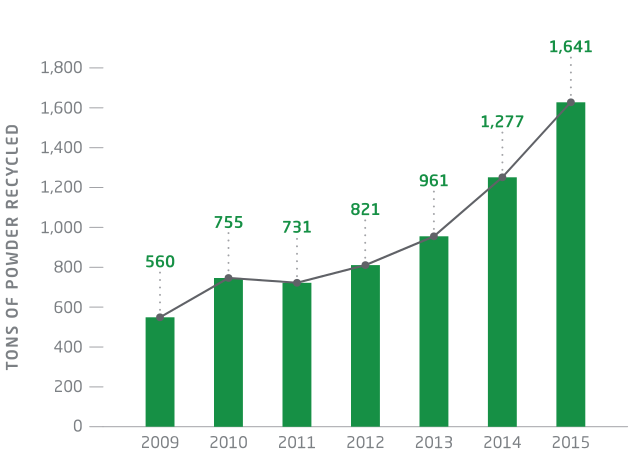
Scrap powder can be recycled and put to good use as a modified binder in the production of nonwoven products used in vehicles as sound insulation, in bedding, and in domestic appliances. To support the recycling program, Axalta created its own Ecopoudre service, which oversees the collection of the powder scrap at our customer and Montbrison locations. In 2015, Axalta and our customers recycled 1,641 tons of powder through this program, leading to a savings of 714,000 Euros.
Total powder recycled